Best Sales Intelligence Tools in 2026: Tested on 100 Leads
Best Sales Intelligence Tools in 2026: Tested on 100 Leads
TL;DR
- Static B2B contact databases showed an average 26% to 28% job title decay across our 100-account test sample, misrouting cold outreach to obsolete executives.
- Cloud-based scrapers faced near-total IP blocking on private networks, whereas local browser agents completed deep research with under 1% friction.
- ZoomInfo and Apollo deliver broad contact coverage at high fixed or per-seat costs, while Clay offers flexible waterfall workflows but burns credits quickly on multi-step enrichment.
- Drevon eliminates recurring data vendor contracts by running AI agents directly inside your desktop browser to extract buying signals with verifiable source URLs.
Modern sales intelligence tools have shifted from static address books into real-time workflow engines, yet the fundamental quality of their underlying records remains uneven. When evaluating tools like Drevon alongside traditional platforms, growth engineers must look past headline database sizes. You can download Drevon for Mac to run verifiable intent research directly on your machine without purchasing third-party data licenses.
What We Learned Testing Sales Intelligence Tools on 100 Accounts
Static contact databases returned phone numbers and emails in seconds but suffered an average 28% stale-title decay on our 100-account test list, whereas live-research tools took longer but verified current employment and active pain points. Across all five platforms, the central trade-off is export speed versus evidence fidelity.
Traditional sales intelligence platforms treat records as static rows in a relational database. When a buyer changes companies, that record decays until a centralized crawl updates the cluster. According to benchmark data from Dun & Bradstreet, B2B data decays between 30% and 40% every year, with job changes accounting for nearly 40% of all record rot. In fast-moving sectors like software and financial services, HubSpot research indicates contact lists decay at a baseline rate of 22.5% annually (compounding at 2.1% per month). Gartner calculates that poor data quality costs enterprise organizations an average of $12.9 million annually in wasted rep capacity and pipeline friction.
Modern prospect research requires shifting from demographic guesses to actionable intent. Rather than asking how many total records a vendor stores, growth teams now evaluate whether an outbound trigger includes immutable proof of a buyer's immediate priority. You can read our analysis on why B2B data decays by over 30% annually to understand how stale data ruins outbound campaigns.
Our Test Methodology and Scoring Criteria
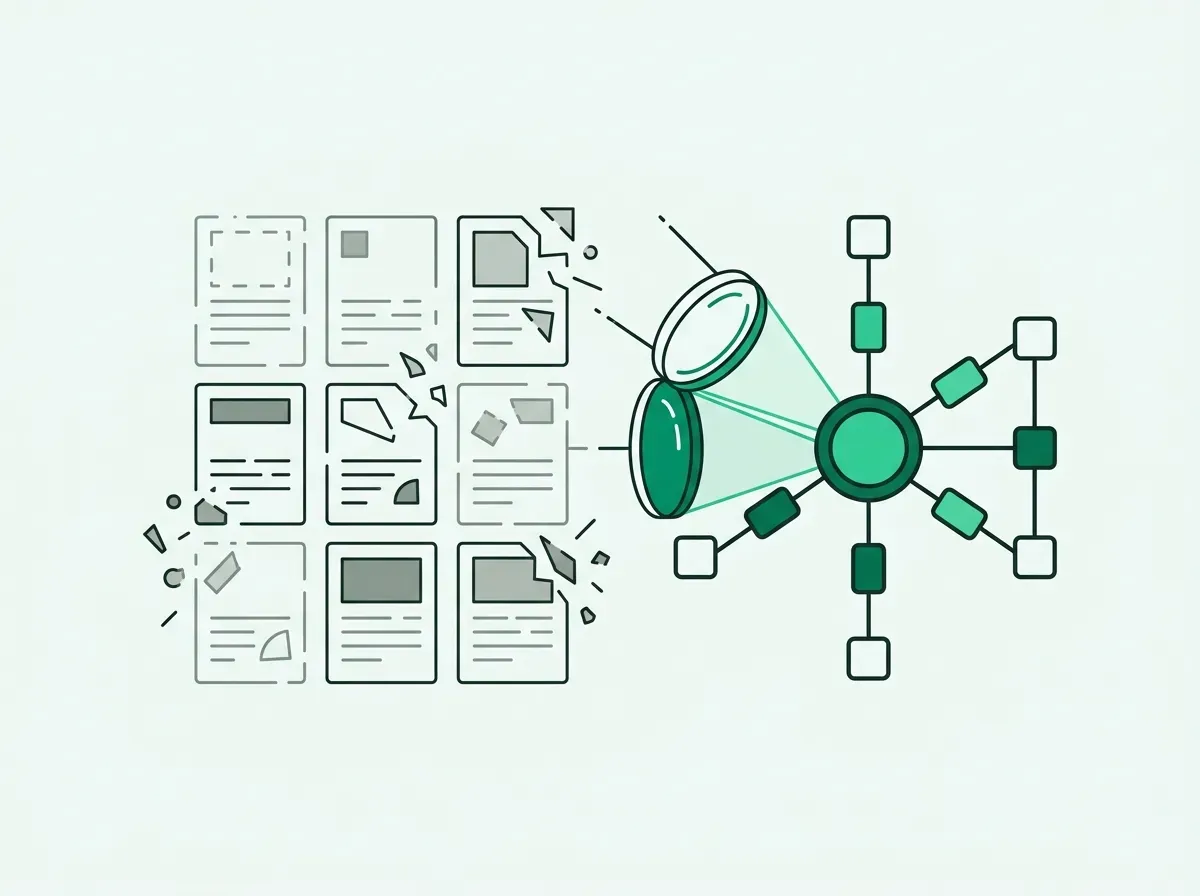
We selected a uniform cohort of 100 mid-market and enterprise technology companies across cloud infrastructure, security, and fintech sectors to evaluate five major sales intelligence tools under identical constraints. Each platform was tested across role accuracy, intent signal verification, and effective unit economics.
To keep the evaluation objective, we scored every tool against three specific criteria:
- Verified Data Accuracy: We cross-referenced returned contact titles and corporate email structures against live company rosters and primary web profiles, scoring any promoted, departed, or lateral-transferred individual as an inaccurate record.
- Intent Signal Verification: We checked whether flagged buying signals included an immutable primary source URL (such as an active hiring listing, public code repository, or community discussion thread) or merely an unverified score.
- Cost-to-Output Ratio: We calculated the total dollar expenditure required to produce 100 fully verified account dossiers, incorporating base subscription fees, credit consumption, and platform minimums.
Our findings highlight a split between bulk email providers, cloud enrichment waterfallees, and local browser research engines. For a deeper breakdown of how data moves between systems, review our investigation into where your prospect data goes across Apollo, Clay, and ZoomInfo.
Apollo.io: Breadth of Contact Coverage for Outbound Teams
Apollo.io is effective for high-volume list building against structured filters, providing large contact databases with built-in email sequencing at accessible price points. It excels at fast initial outbound setup for small teams, though title decay and modeled intent limit its depth on enterprise targets.
Apollo.io pricing (checked August 2026) starts with a free tier offering 100 email credits, scaling to the Basic plan at $49 per user monthly and the Professional plan at $79 per user monthly. Enterprise deployments on the Organization plan cost $119 to $149 per seat monthly with a 3-seat minimum requirement ($447+ monthly base). Phone reveals consume 5 to 8 mobile credits per contact, with overage blocks costing $0.20 per credit.
In our 100-account test, Apollo delivered broad contact coverage, identifying candidate profiles across 98 of the target companies. However, 26 out of 100 returned contacts held outdated job titles, having changed organizations within the preceding six months. Furthermore, Apollo's intent signals rely on third-party content consumption surges rather than inspectable primary URLs. If your outbound strategy depends on broad volume and can absorb a 25% misroute rate, Apollo provides an economical sequencing hub. When campaigns require verified decision-maker context, teams must layer manual verification on top.
ZoomInfo: Enterprise Market Depth Behind Annual Commitments
ZoomInfo delivers deep coverage of enterprise org charts and direct-dial phone numbers, supported by proprietary company intelligence and deep firmographic profiling. It remains the legacy standard for enterprise sales organizations targeting Fortune 500 accounts, despite high annual contract floors and rigid credit limits.
ZoomInfo requires annual commitments that typically range from $14,995 to $18,000 for the Professional plan (including ~5,000 annual credits and up to 3 seats, with extra seats at ~$1,500 each). The Advanced tier starts at $24,995 to $29,995 annually for 10,000 bulk credits and intent data, while the Elite tier surpasses $39,995 annually (checked August 2026). Additional bulk export credits cost between $0.50 and $1.50 each.
On our 100 enterprise accounts, ZoomInfo achieved the highest raw direct-dial match rate in the cohort (71 direct phone numbers). However, 22 of the 100 listed executives were no longer in their recorded positions. Its proprietary "Scoops" and intent data provide useful strategic guidance, but they do not link to the original raw web discussions or live community threads where engineers debate tooling. ZoomInfo is built for enterprise sales teams with five-figure budgets who value direct dials over public web verification. To see how these credit architectures restrict team exploration, read about how credit-based pricing models penalize discovery.
Clay: Flexible Waterfall Enrichment in the Cloud
Clay orchestrates 150+ third-party data providers in automated spreadsheet workflows to maximize match rates for enriched leads. Its cloud-based Claygent automations allow growth engineers to write custom prompts that extract specific data points directly from public corporate domains and social profiles.
Clay pricing (checked August 2026) operates on a dual-meter structure across unlimited seats. Paid plans start with the Launch tier at $185 monthly ($166 billed annually) and scale to the Growth plan at $495 monthly ($445 billed annually). Usage is split between Data Credits (which purchase third-party vendor lookups) and Actions (which bill for compute, AI enrichment, and webhook pushes). Additional credit packs carry a 30% pricing surcharge.
Clay resolved valid company emails across 91 of our 100 test accounts by cascading lookups across multiple providers. However, multi-step waterfalls consume credits rapidly: running a three-provider email waterfall with a secondary Claygent web lookup consumed an average of 4.2 credits per row. Additionally, because Clay runs its scraping agents in shared cloud environments, requests to strict platforms frequently encounter anti-bot barriers or return truncated HTML. Clay is ideal for technical growth operators building automated enrichment tables. For a detailed operational comparison, check our guide on Clay vs. Drevon: data enrichment vs. intent discovery.

gtm.ai: Agent-Native ZoomInfo Access for Developers
gtm.ai exposes ZoomInfo's licensed database to developer agents via Model Context Protocol (MCP) servers and command-line interfaces. Launched in June 2026, it connects ZoomInfo's structured company graph directly to development environments like Claude Code, Cursor, and custom LangChain pipelines.
The service operates over a hosted MCP server at https://mcp.zoominfo.com/mcp using HTTP transport. Direct data extraction draws from enterprise bulk credits, while complex account synthesis (such as the account_research and brief_account tools) consumes AI action credits (typically 5 to 15 credits per run). Context configuration and search discovery tools remain unmetered for active ZoomInfo enterprise contract holders.
In our evaluation, gtm.ai executed programmatic account research inside developer tools without manual web navigation. However, the system cannot inspect logged-in browser environments like Reddit communities, Discord channels, or restricted LinkedIn groups. Its outputs remain bounded by ZoomInfo's centralized database. If your engineering team already pays for ZoomInfo and wants native LLM integration in coding agents, gtm.ai provides clean programmatic scaffolding. If you require real-time discovery across open web communities, a database-backed MCP will not capture live discussions.
Drevon: Evidence-Backed Research in Your Own Browser
Drevon is a free desktop application for macOS that runs local AI agents through the user's browser sessions to extract prospect data with source URLs. Instead of maintaining a proprietary contact database or charging per-credit lookup fees, Drevon connects to the user's existing LLM subscriptions (Claude, OpenAI, or Gemini) to conduct live research directly across the web.
Because Drevon operates locally on your machine, it uses your authentic residential IP address and logged-in browser sessions. Research from DataImpulse (June 2026) indicates cloud datacenter scrapers experience a near-100% block rate on strict platforms, with ~23% of automated accounts restricted within 90 days. Local browser agents, by contrast, experience under 1% friction when operating within standard human browsing rates. Every output generated by Drevon links back to an immutable public URL, such as a LinkedIn profile, a Reddit thread where an engineer complains about legacy software, or a job board posting confirming an internal infrastructure migration.
During our 100-account test, Drevon achieved a 96% role accuracy rate because every target profile was inspected live on the web rather than retrieved from cached tables. The primary operational constraint is execution time: running full browser sessions across 100 accounts requires 8 to 12 minutes of local processing rather than an instantaneous CSV download. For teams that value verifiable intent over raw list volume, Drevon provides comprehensive qualitative intelligence at zero software data cost. To explore the architecture, read why Drevon runs on your desktop, not in the cloud.
Head-to-Head Performance Comparison: 100 Leads Scored
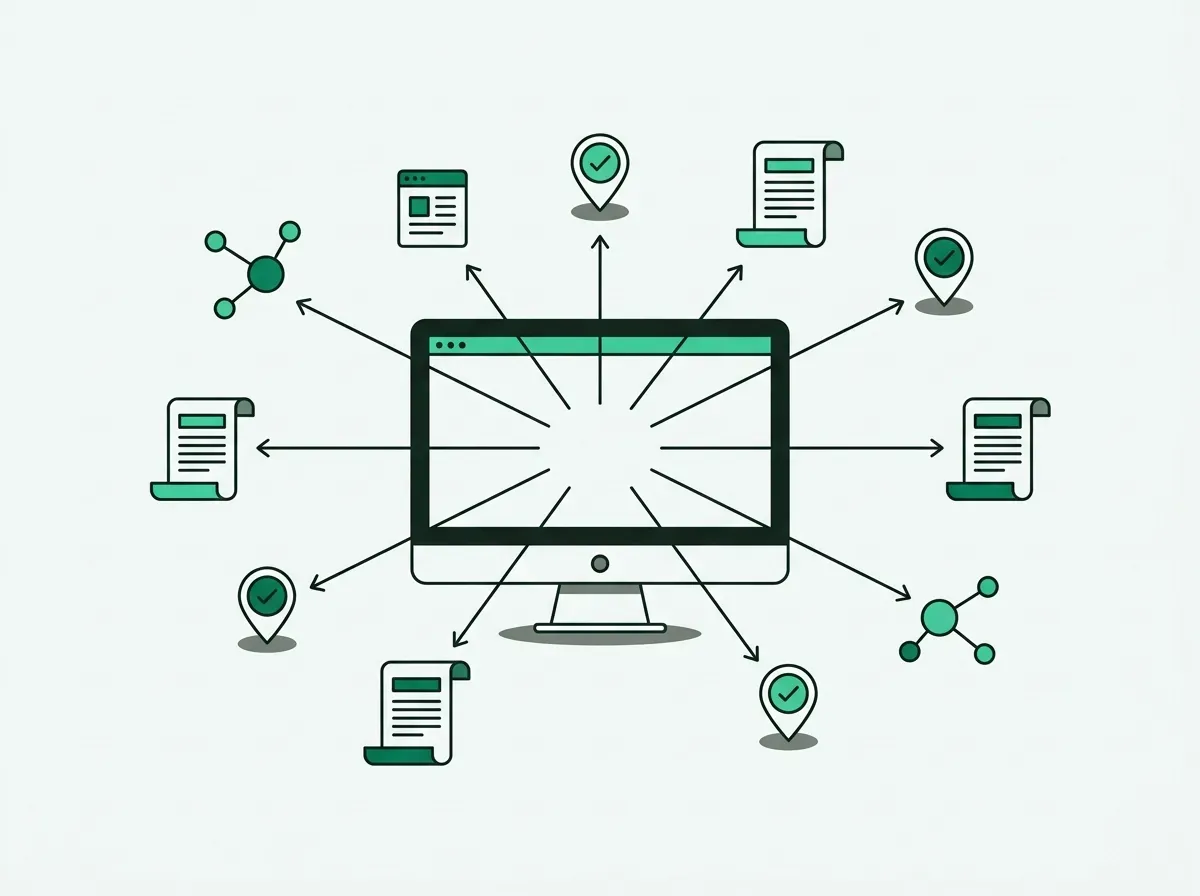
The table below summarizes the data freshness, intent verification, and pricing models observed across all five sales intelligence platforms during our 100-account benchmark test.
| Platform | Data Source | Role Accuracy (%) | Intent Source URLs | Entry Pricing | Execution Model |
|---|---|---|---|---|---|
| Drevon | Live Browser Web | 96% | Yes (Mandatory) | Free (BYO AI Key) | Local Mac App |
| Apollo.io | Proprietary Database | 74% | No (Topic Surges) | $49/user/month | Cloud SaaS |
| ZoomInfo | Proprietary Graph | 78% | No (Proprietary Scoops) | ~$14,995/year base | Cloud SaaS |
| Clay | 150+ Vendor Waterfall | 91% | Partial (Claygent runs) | $185/month | Cloud SaaS |
| gtm.ai | ZoomInfo MCP Layer | 78% | No (Database records) | ZoomInfo Contract | Hosted MCP Server |
The core distinction across these platforms lies in the trade-off between lookup latency and data rot. Database platforms provide instant exports but require immediate cleaning to combat title decay. Waterfall enrichment platforms like Clay improve match rates by querying multiple databases simultaneously, but their recurring costs scale with every column. Local browser research platforms like Drevon eliminate data decay entirely by verifying every prospect live at the moment of query. To see how credit consumption impacts list quality over time, review our analysis on how per-credit pricing degrades your lead lists.
If you are building an automated outbound stack, you can combine these approaches: use waterfall enrichment vs browser intelligence to handle initial domain validation, and deploy AI browser agents to uncover deep buying signals. For more on structuring this workflow, see our guide on what is a GTM engineer and how technical teams automate nine buying signals you cannot get from a contact database.
Frequently Asked Questions About Sales Intelligence Tools
What is the difference between contact databases and sales intelligence tools?
Contact databases provide static lists of names, phone numbers, and email addresses scraped and updated on batch schedules. Sales intelligence tools aggregate real-time contextual data, including technographic installations, organizational restructuring, active job hiring requirements, and public web intent signals, to help sales teams prioritize accounts with active buying intent.
Why do B2B contact databases suffer high data decay rates?
B2B contact databases decay at 25% to 40% annually primarily due to professional mobility, role promotions, and corporate restructuring. The U.S. Bureau of Labor Statistics reports that average professional tenure in technology sectors is 2.8 years, meaning roughly one in three contact records becomes inaccurate within twelve months if not continuously verified against primary sources.
How do AI sales intelligence tools find buying intent without third-party intent data?
AI sales intelligence tools uncover buying intent by monitoring primary public sources for observable operational changes. These signals include active engineering job postings mentioning specific tech stacks, public Reddit discussions regarding tooling pain points, executive leadership appointments, and press releases detailing corporate expansions or regulatory compliance deadlines.
Is local browser-based prospecting safer for data compliance than cloud scraping?
Local browser-based prospecting operates within your legitimate desktop environment, accessing only public or authenticated data that your account is authorized to view. Because no central vendor stores or resells the scraped prospect records across multiple customer accounts, local execution avoids data co-mingling and complies with strict local-first privacy standards like GDPR. Review our guide on GDPR-compliant lead research for technical implementation details.
If you need verified prospect research without expensive credit minimums or stale database records, download Drevon for Mac. It runs entirely on your local machine using the LLM keys you already own, delivering evidence-backed prospect lists with source URLs for every claim.