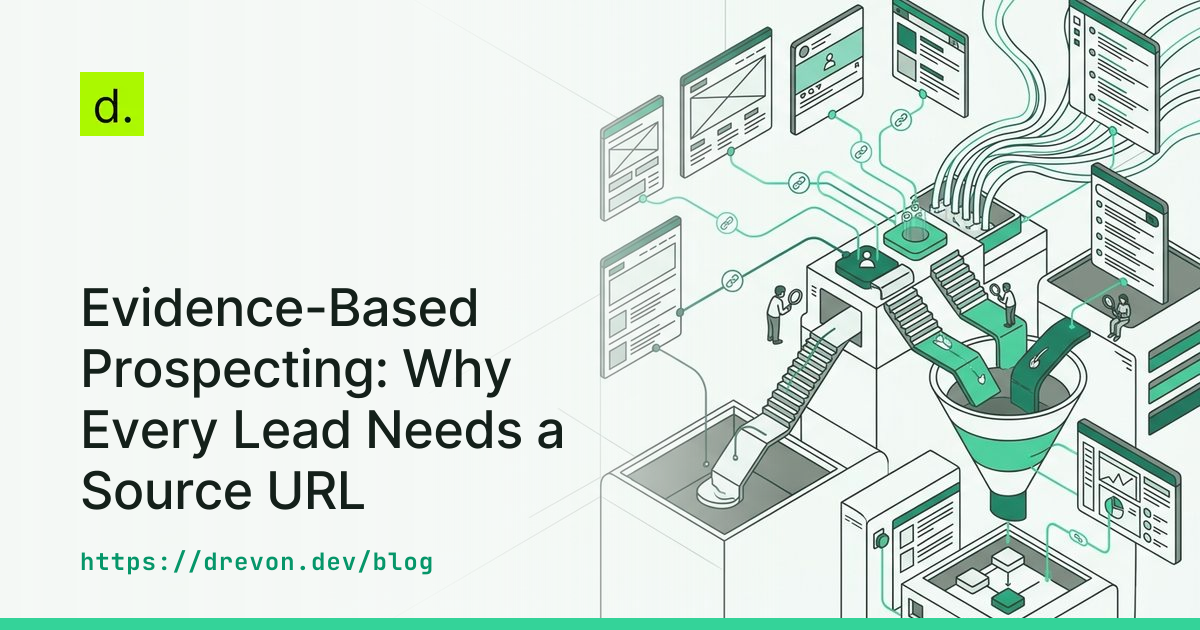
Evidence-Based Prospecting: Why Every Lead Needs a Source URL
The Problem with Context-Free Lead Lists
We believe effective prospecting requires verifiable evidence of intent. The traditional lead list, based on static firmographics like company size and industry, is no longer sufficient. These lists lack a critical component: the 'why now'—a specific trigger event that signals a prospect is actively seeking a solution.
Outreach based on this context-free data is inherently generic. It results in low reply rates that damage brand reputation. The data confirms this decline. An analysis of 16.5 million emails found the average B2B cold email reply rate fell from 6.8% in 2023 to 5.8% in 2024. Other data suggests only 8.5% of all outreach emails receive any response at all. When the vast majority of outreach is ignored, we consider the model broken.

The New Standard: A Source URL for Every Lead
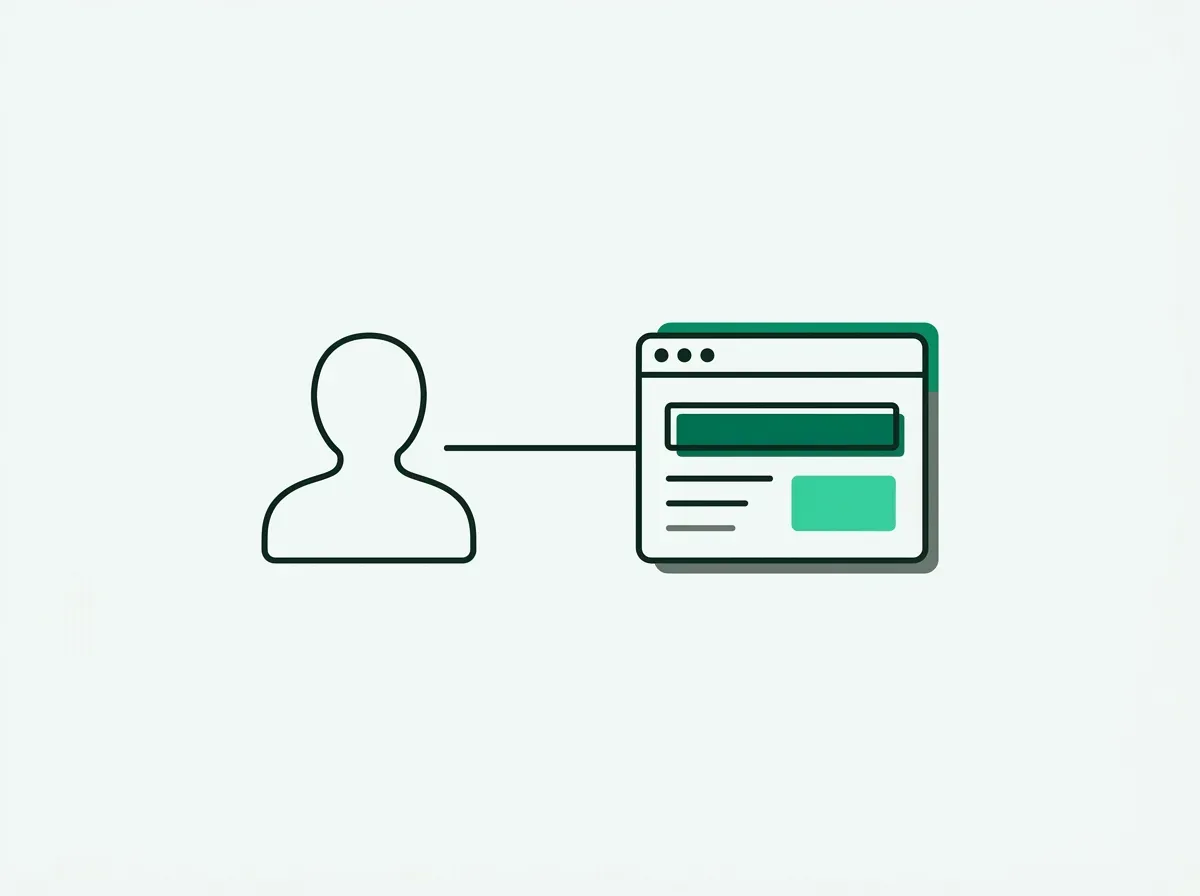
We define evidence-based prospecting as a mandate that every lead is accompanied by verifiable proof of need. This proof is most often a URL linking to a primary source: a job posting, a press release, a forum question, or a social media thread. We find this simple requirement fundamentally changes the nature of lead qualification.
Instead of relying on abstract lead scores, qualification becomes a direct response to a concrete, recent event. A source URL provides the who, what, and why needed to start a relevant conversation. It shifts our goal from delivering a pitch to solving a stated problem.
The Tangible Benefits of Sourced Leads
When we ensure every lead has a source, the benefits are immediate and measurable. Hyper-personalization becomes simple. The opening line writes itself:
“Saw on LinkedIn that you're hiring a new Head of Data Science...”
“Read your comment on Reddit about scaling your AWS costs...”
This relevance drives dramatically higher conversion rates. Research from Gong Labs reveals that referencing a company-specific topic triples prospecting email reply rates for executive buyers. Campaigns built on trigger events consistently outperform generic outreach. For example, Sendoso used job changes as a trigger to build a campaign that achieved a 20% reply rate. Another company, Cleverly, targeted leads immediately after they secured funding and maintained a 31% reply rate.
This approach also improves sales team efficiency. Sales development representatives spend between 5 and 16 hours per week on manual lead research. By providing a source URL with each lead, we can eliminate this research phase, allowing representatives to focus on high-probability conversations.
Where to Find Your Evidence: Common Signal Sources
We find these signals of intent are publicly available if you know where to look. They typically fall into four categories:
- Hiring Signals: Job posts on LinkedIn or company career pages are direct indicators of need. A company hiring a 'Salesforce Administrator' likely needs Salesforce-integrated tools. A post for a 'Head of Content' signals budget for new marketing technology.
- Intent Signals: Questions and complaints on Reddit, Twitter, and industry forums reveal active pain points. A thread asking, “What's the best alternative to Marketo?” is a high-value lead for a marketing automation competitor.
- Growth Signals: Funding announcements on Crunchbase, new product launches, or key executive hires all signal moments of strategic change and new budget allocation. Outreach within 30 to 60 days of a funding announcement produces some of the highest conversion rates of any trigger.
- Technology Signals: Public data can show when a company adds or removes a specific tool from their technology stack. This is a clear signal of dissatisfaction with a competitor or a search for a new capability.

How to Operationalize This Approach
We've found that manually searching for these signals is a valid starting point, but it is slow and does not scale. Our modern growth workflow requires defining key signals, automating the discovery process, and feeding a clean, sourced list to the sales team.
This is what our AI assistants at Drevon are built for. A user can instruct an agent in plain English: “find me 50 companies that just raised a Series A and are hiring their first Head of Sales.” The agent browses the necessary sources, identifies the companies that match, and returns a list complete with the proof. The output is simple and actionable: Company, Contact, and the critical 'Source URL'.
Our recommended next step is to make the source URL a required field for every new lead in your pipeline. This enforces a standard of quality and ensures your team only works on leads with clear, verifiable intent.