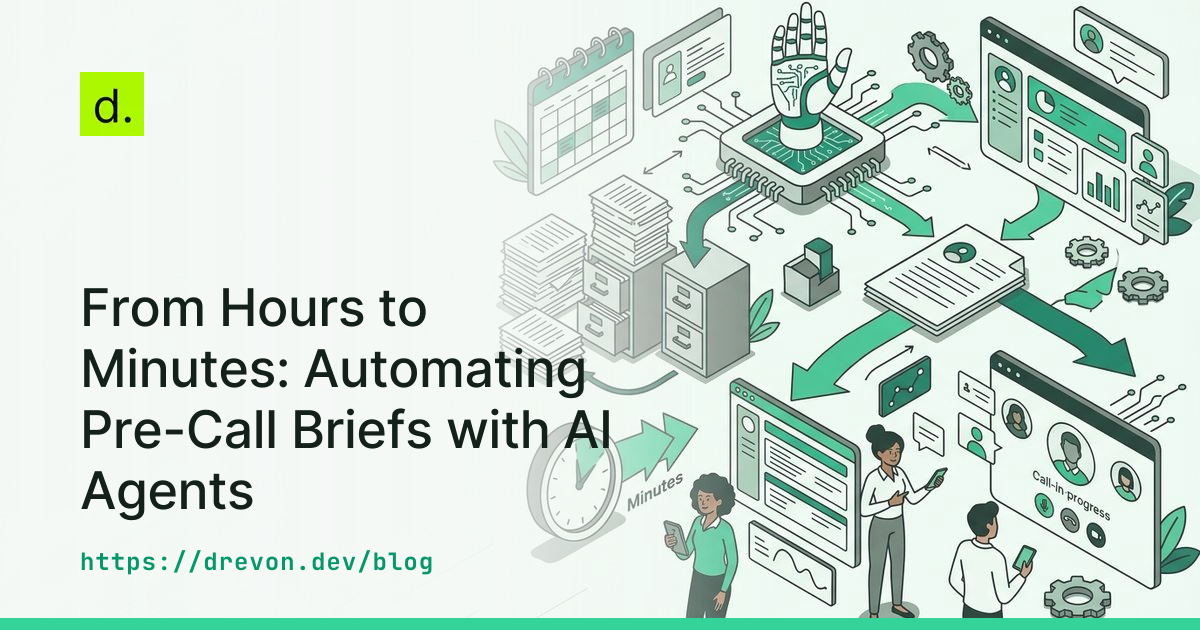
From Hours to Minutes: Automating Pre-Call Briefs with AI Agents
The High Cost of Manual Research
We built Drevon to automate the manual work that slows down growth teams. One of the most time-consuming tasks is pre-call research, a process that is both critical for success and difficult to scale. According to data from Salesforce, sales representatives spend about 14% of their week on account research and call preparation—time that is not spent selling. For a sales team, this translates directly into thousands of dollars per year, per rep, spent on manual data collection.
The return on this time investment is often low. Manual research typically yields surface-level data: company size, funding history, and a quick scan of a prospect's LinkedIn profile. This rarely provides a compelling reason for a prospect to meet. This might be why, according to widely-cited research from SiriusDecisions, 82% of B2B decision-makers believe sales reps are unprepared. This is the gap between raw activity and useful insight.

Anatomy of a High-Impact Brief
A useful brief moves beyond standard firmographics to focus on specific buying triggers. The goal is not a data dump, but a synthesized point of view that answers the question: 'Why should this person talk to us, and why now?' At Drevon, we find the most effective briefs are built around these trigger events:
- Leadership Changes: A new executive is often a catalyst for change. New C-suite leaders frequently review existing vendors and strategies within their first 90 days, creating a critical window of opportunity.
- Financial Events: A new funding round or M&A activity signals an infusion of capital, forcing a re-evaluation of strategy and tools.
- Company Growth: A hiring spree in a specific department, a new product launch, or geographic expansion all signal new needs and potential software gaps.
- Public Statements: A new strategic initiative mentioned in an earnings call or a challenge cited in a senior-level job description provides a precise, relevant entry point for a conversation.
A high-impact brief connects these triggers to a specific challenge that our product can solve. This forms the foundation for a personalized, relevant conversation.
An AI Agent Workflow for Automated Briefing
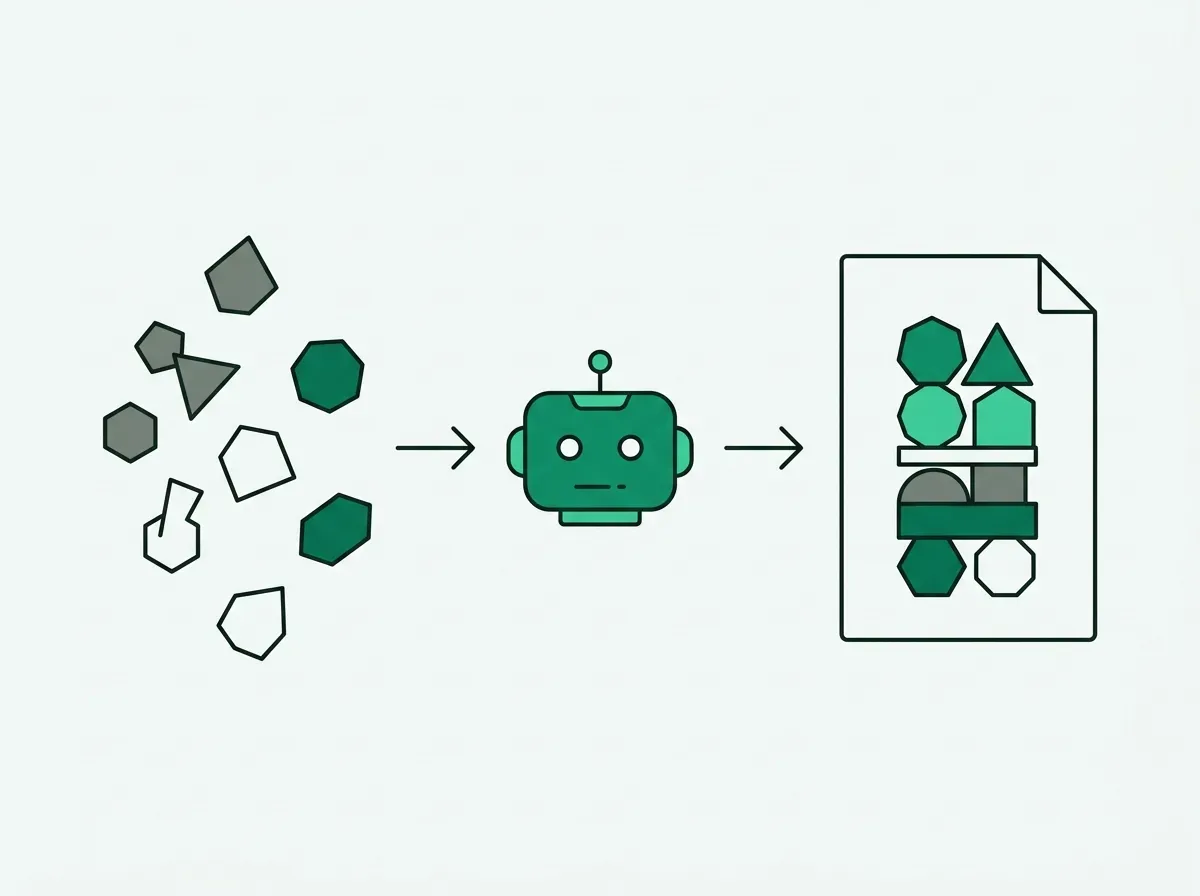
AI agents transform pre-call research from a manual task into an automated workflow. Our process is simple and repeatable. It begins with basic inputs, such as a company name and a prospect's LinkedIn URL. We then give the agent specific instructions.
Instead of manually searching, we task a Drevon agent:
- 'Analyze the company's last earnings call transcript for mentions of 'AI investment' or 'supply chain optimization'.'
- 'Find recent posts by the prospect on LinkedIn related to GTM challenges.'
- 'Summarize the top three strategic priorities listed in the company's last three press releases.'
The agent browses public sources—news sites, financial reports, social media, and job boards—to find and synthesize the relevant information. It doesn't just collect links; it extracts key quotes, identifies patterns, and connects disparate data points into a coherent narrative. The agent returns a structured brief delivered in minutes. We find its output is about 90% of the way there. A human still needs to do the final 10%—verifying the most critical details and adding strategic nuance. The agent's role is to eliminate the costly manual data collection.
Measuring the Result: From Hours to Minutes
The direct time savings are clear. An automated workflow reduces the 45 minutes we might spend preparing for an enterprise meeting to about five. For a team of ten reps, this returns hundreds of hours of selling time each month.
The qualitative impact is more significant. Better research leads to better conversations. According to a 2021 report from McKinsey, fast-growing companies that excel at personalization generate 40% more revenue from those activities than their peers. A well-researched call demonstrates respect for the prospect's time and a genuine understanding of their business context.
Sales teams using AI report substantial productivity gains. Salesforce research found that sales reps believe AI saves them an average of 1.7 hours per day. A report from People.ai found that 81% of sales leaders who have adopted generative AI say it has increased their team’s overall revenue. By automating research, agents free up representatives to focus on the human elements of selling: building rapport, asking insightful questions, and solving customer problems.

How to Get Started
Building an effective briefing agent begins with defining what a perfect brief looks like for your team. We recommend starting by listing the exact information that signals a high-quality opportunity for your business. What are the key buying triggers you look for? What information about a prospect helps you build immediate rapport?
Once defined, you can translate this list into a series of clear prompts. Using Drevon, you can deploy an agent with these instructions and begin automating your pre-call preparation immediately. The result is a system that consistently produces high-quality intelligence, enabling your team to have better conversations and close more deals.