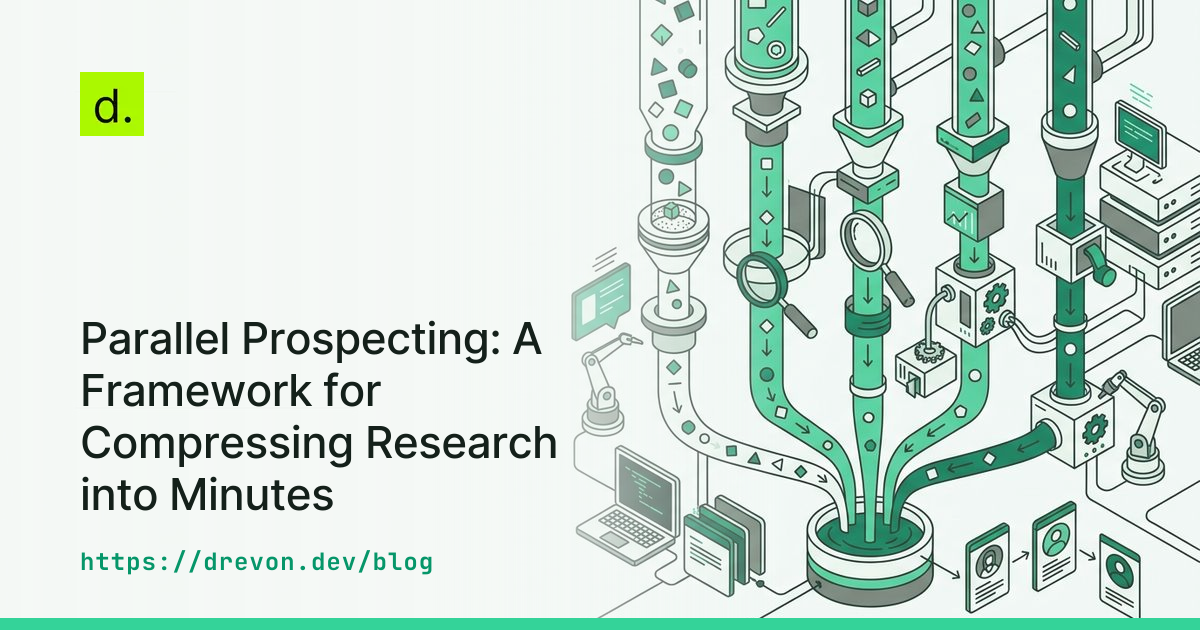
Parallel Prospecting: A Framework for Compressing Research into Minutes
We run multiple AI agents in parallel to compress weeks of B2B prospecting into a single 10-minute session. This approach works by dividing a large research task into smaller, simultaneous searches across different sources and intent signals. It directly addresses the primary bottleneck in both manual and automated prospecting: the serial, one-at-a-time nature of the work.
The Bottleneck of Serial Prospecting
Traditional prospecting is a linear process. A sales development representative (SDR) or a single AI agent executes one query, scans one source, and reviews one list before moving to the next. This creates a fundamental limit on speed and scale. Research from Salesforce shows that sales reps spend only about 28% of their week on direct selling activities, with a significant portion of the rest consumed by manual research. Even with automation, a serial workflow is like a grocery store with a single checkout lane serving a long line of customers. To increase throughput, you need more lanes operating at once.
Based on our internal benchmarks, a standard prospecting task that takes hours when performed serially by a human, or even sequentially by a single AI, is completed 8 to 10 times faster when run in parallel. The goal is to move from one checkout lane to ten.

A Framework for Parallel Prospecting
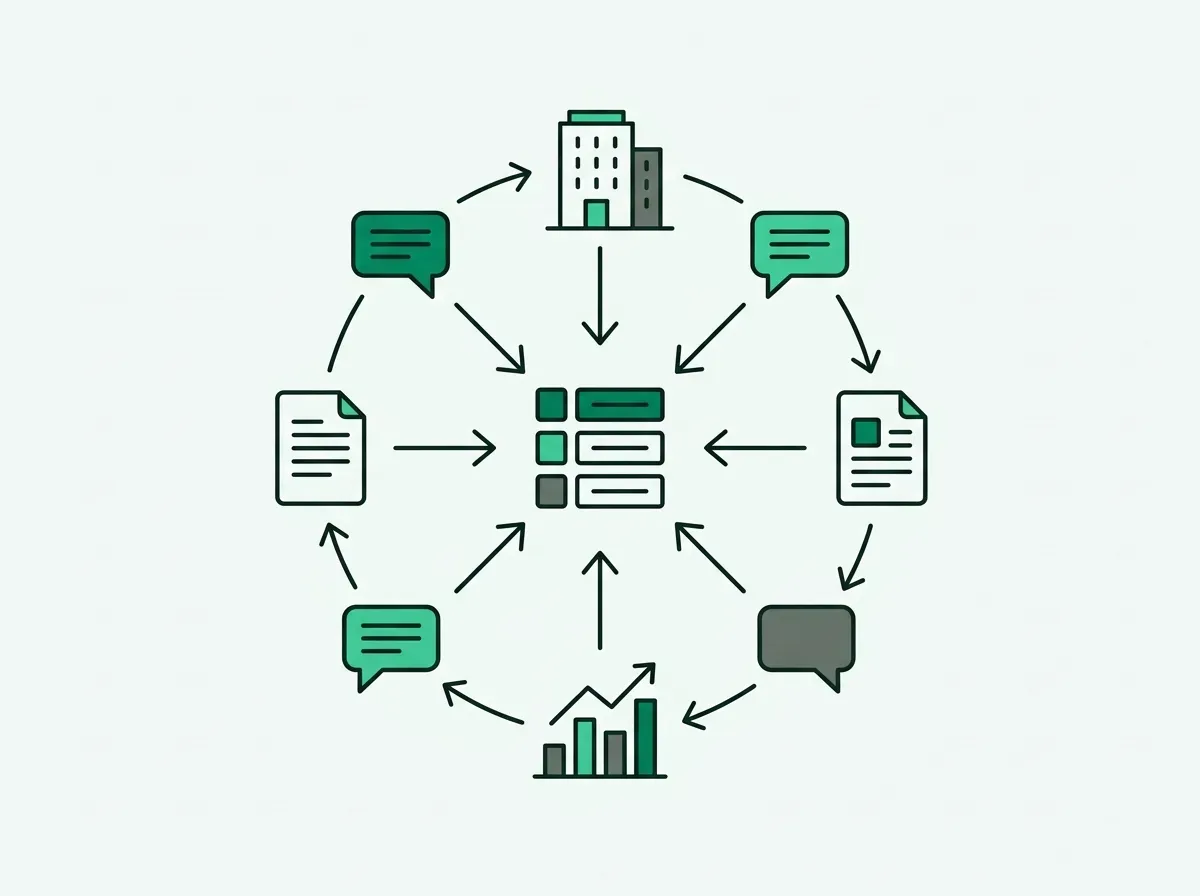
Parallelism means executing multiple independent tasks simultaneously. In B2B prospecting, this translates to assigning different AI agents to different sources or different buying signals, all for the same Ideal Customer Profile (ICP). For example:
- Agent 1: Scans LinkedIn for new executive hires at target accounts.
- Agent 2: Scans Reddit for complaints about a competitor's product.
- Agent 3: Scans Crunchbase for new funding rounds.
- Agent 4: Scans job boards for roles indicating a specific need.
All agents work at the same time and report back to a single, consolidated list. This eliminates the need to manually switch contexts, merge data from different spreadsheets, and de-duplicate results.
Step-by-Step: Launching 10 Parallel Agents in Drevon
Here is the exact framework we use to launch a parallel prospecting session. The process is designed to be completed in about ten minutes.
- Define a Precise ICP. Start with a clear, machine-readable definition of your ideal customer. For example: B2B SaaS companies in the United States with 50-200 employees that use HubSpot and have raised a Series A or B.
- Deconstruct the Search into Independent Tasks. This is the critical step. Instead of one broad search, break the problem down into 10 distinct, parallelizable tasks based on high-intent buying signals. Focus on triggers like hiring, funding, or technology changes.
- Write a Clear Prompt for Each Agent. Each task becomes a simple, plain-English prompt for an agent. For example: 'Find 10 companies on LinkedIn that match the ICP and recently posted a job for a 'Demand Generation Manager'.'
- Assign and Run Simultaneously. Assign each prompt to a separate agent within Drevon. Launch all agents at the same time with a single command.
- Review the Consolidated Results. Drevon automatically runs the agents, collects the findings, de-duplicates the leads, and formats the output into a single, clean list for review.
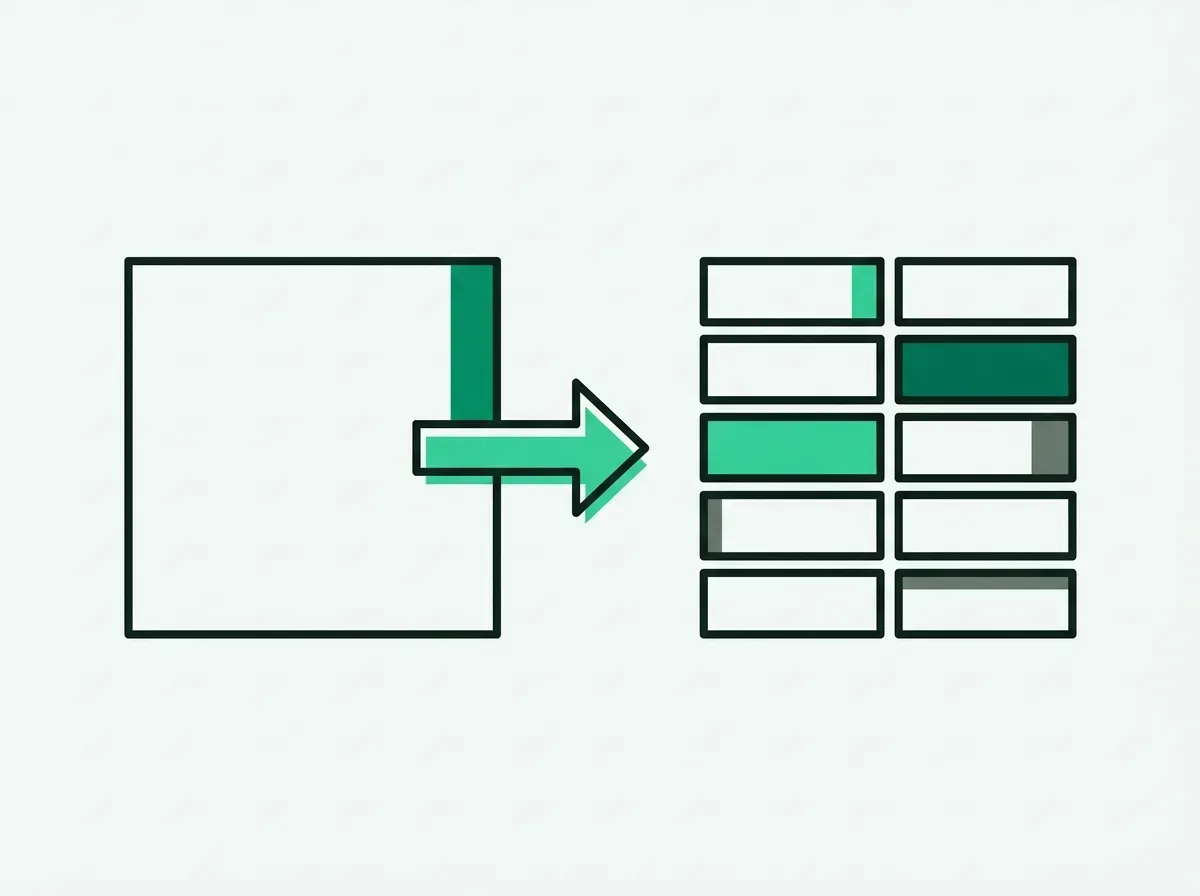
Example: 10 Parallel Tasks for a SaaS ICP
Let's apply this framework to a specific ICP: VPs of Sales at Series B technology companies in North America. Here are 10 parallel agent tasks designed to find leads matching this profile who are demonstrating active intent.
| Agent | Task | Source | Intent Signal |
|---|---|---|---|
| 1 | Find 10 people with the title 'VP of Sales' at Series B tech companies. | Role & Firmographics | |
| 2 | Find 5 tech companies that announced a Series B funding round in the last 60 days. | Tech News Sites | New Funding |
| 3 | Find 5 threads where users complain about their current sales CRM. | Reddit (r/sales) | Problem Awareness |
| 4 | Find 10 Series B companies hiring for 'Sales Enablement' or 'RevOps' roles. | Job Boards | Team Growth / Tooling Need |
| 5 | Find 5 people with 'VP of Sales' in their bio discussing sales stack challenges. | Twitter / X | Active Discussion |
| 6 | Find 10 people with the title 'Head of Sales' at Series B tech companies. | Adjacent Title | |
| 7 | Find companies that recently dropped a major competitor from their tech stack. | Technographics Data | Technology Change |
| 8 | Find VPs of Sales at target companies who recently engaged with our company's content. | First-Party Engagement | |
| 9 | Find 5 companies on G2 actively comparing our product category. | Review Sites | High Purchase Intent |
| 10 | Find 10 companies matching the ICP that are hiring their first SDR team. | Job Boards | Scaling Operations |
Limitations and Best Practices
The effectiveness of this method depends entirely on the quality of the inputs. The precision of your ICP and the clarity of your prompts directly determine the relevance of the results. Poorly designed tasks can lead to overlapping or low-quality leads.
To avoid this, ensure each agent has a distinct, valuable scope. This method is optimized for finding leads with strong intent signals, not for exhaustive market mapping. The goal is speed and signal quality over sheer volume.
We recommend starting with two or three parallel agents to test and refine your prompts. Once you have a set of high-performing prompts, you can scale to 10 or more to maximize coverage.
Next Steps
Parallel prospecting is a core function of Drevon. By breaking down research into simultaneous, specialized tasks, you can gather in minutes what would otherwise take days or weeks. You can define your ICP and a set of parallel tasks to begin finding qualified leads today.